There is so much technology put into fins, that it is easy to go on tangents looking at any and all technology. On such a tangent, this video was discovered. The photographers may be stretching a bit to say the images they capture showcase the boardshort's technology, but seeing surfing in 3D is pretty amazing. It was tough to get a close look at what Mich Fanning is using now that he has signed with FCS, but you could see clearly that Matt Wilko was on K2.1 PCs.
Monday, October 18, 2010

Thursday, October 14, 2010
For the SUP'ers out there
Stand Up Paddling is burning across the map like a wild fire, and while we've spent a bit of time on them, we don't claim to be all knowing about how they handle and what works best. For this reason we turn to the experts for their advice. Our friend John Ashley runs paddlesurf.net, and between him and his following, I don't think there is a single SUP product on the market they haven't tested. I was on youtube today and came across a video of his, with Art Curtis talking about their favorite fin setup for noseriders style SUP's. These guys live and breathe SUP surfing so we take their advice seriously. Here is their review of the Futures Albacore Flex with Vector Tech Foil 3/2's on the side.
Friday, October 8, 2010
How to Select the Perfect Fin
At the Gallery we get quite a few questions from people about how to choose a fin. With multiple manufacturers making signature fins for the same pros, it can get complicated. We wrote this article and posted it in the Fin Theory section of the site to help you pick the best match for you and your board.
Whether you are looking for a single fin for your longboard, a flex fin for your hull or a set of removable fins for your performance quad, there are a few basic rules to follow when choosing fins:
A wide/long fin base will have more drive and draw out your turns
A narrow/short fin base will have less drive but be easier to turn
Deep fins will hold better on steep faces and be more stable in the white water
Short fins release easier if you are looking to slide your tail out on hard turns
Fins with more rake (sweeps further back) will draw out your turns and capitalize better on the flex patterns of the fins
Fins with upright postures will be more responsive in weak, slow surf.
Smaller fins are looser and more forgiving but offer less hold and drive
Larger fins offer more hold and control in big surf, but will track in smaller waves.
While those concepts can be applied universally to almost all fin configurations, here are some tips for specific fin setups.
Single Fins:
The standard size rule of thumb is one inch of fins for every foot of board (9” fin for a 9' board)
A fin with more tip area will be more stable for nose rides
When adding side biter’s to create a 2+1 setup, cut two inches off the length your center fin.
Raked fins allow more of a carving turn while upright and D fins are designed as pivot points for more traditional old school turns. (drop knee cut backs, top turns then to the nose).
Twin Fins/Fish
Keel fins, with a long base and vertical trailing edge, are all drive but tend to lock up when going fast, often attributed to the very wide tails they are typically seen on
Twin fins with a more raked template are know for being very loose and fast
The addition of a small trailer fin has gained popularity because it offers stability and control when going fast, and helps prevent surfers from turning too hard and killing their speed.
Thrusters
Bigger fins with more base will help control your standard board in bigger surf
Small size differences are more noticeable because the difference is multiplied by three fins
Side fins with an upright posture combined with a center fin that has more rake can produce great drive while remaining loose.
Wider tails benefit larger fins unless they have deep channels.
Quads
Using smaller trailing fins with symmetrical foils will significantly loosen up a quad
The addition of another fin and placing the fins so far out on the rail allows quad to us smaller fins than thrusters.
Generally:
Your boards template, rails, and bottom contours will help determine your fin choice as will your weight, where you ride and how you ride.
These fin tips should make shopping through Wave Riders Fin Gallery much easier and more productive. Feel free to ask us questions about specific fins by clicking the question link on the individual fin pages.
Whether you are looking for a single fin for your longboard, a flex fin for your hull or a set of removable fins for your performance quad, there are a few basic rules to follow when choosing fins:
A wide/long fin base will have more drive and draw out your turns
A narrow/short fin base will have less drive but be easier to turn
Deep fins will hold better on steep faces and be more stable in the white water
Short fins release easier if you are looking to slide your tail out on hard turns
Fins with more rake (sweeps further back) will draw out your turns and capitalize better on the flex patterns of the fins
Fins with upright postures will be more responsive in weak, slow surf.
Smaller fins are looser and more forgiving but offer less hold and drive
Larger fins offer more hold and control in big surf, but will track in smaller waves.
While those concepts can be applied universally to almost all fin configurations, here are some tips for specific fin setups.
Single Fins:
The standard size rule of thumb is one inch of fins for every foot of board (9” fin for a 9' board)
A fin with more tip area will be more stable for nose rides
When adding side biter’s to create a 2+1 setup, cut two inches off the length your center fin.
Raked fins allow more of a carving turn while upright and D fins are designed as pivot points for more traditional old school turns. (drop knee cut backs, top turns then to the nose).
Twin Fins/Fish
Keel fins, with a long base and vertical trailing edge, are all drive but tend to lock up when going fast, often attributed to the very wide tails they are typically seen on
Twin fins with a more raked template are know for being very loose and fast
The addition of a small trailer fin has gained popularity because it offers stability and control when going fast, and helps prevent surfers from turning too hard and killing their speed.
Thrusters
Bigger fins with more base will help control your standard board in bigger surf
Small size differences are more noticeable because the difference is multiplied by three fins
Side fins with an upright posture combined with a center fin that has more rake can produce great drive while remaining loose.
Wider tails benefit larger fins unless they have deep channels.
Quads
Using smaller trailing fins with symmetrical foils will significantly loosen up a quad
The addition of another fin and placing the fins so far out on the rail allows quad to us smaller fins than thrusters.
Generally:
Your boards template, rails, and bottom contours will help determine your fin choice as will your weight, where you ride and how you ride.
These fin tips should make shopping through Wave Riders Fin Gallery much easier and more productive. Feel free to ask us questions about specific fins by clicking the question link on the individual fin pages.
Wednesday, September 29, 2010
Riding Broken Boards
This is a video found on Korduory.tv that is a prime example of how much fun it can be to experiment with boards. Critter Baugh broke the tail off of his standard thruster between the side and trailing fins, and decided to glass the tail back up as is and keep surfing it. I'm sure he is one of those guys who can make surfing a the coffee table look fun, but i doubt he would be out on a day this good if he didn't really enjoy the ride.
When they show the board at the beginning of the video I can't help but think of the Mini Simmons boards that are gaining a strong following. The wide blunt tail with the fins out on the rail and all the way back seems to be working for surfers these days.
Here is the video and a Mini Simmons "bar of Soap" to compare.

When they show the board at the beginning of the video I can't help but think of the Mini Simmons boards that are gaining a strong following. The wide blunt tail with the fins out on the rail and all the way back seems to be working for surfers these days.
Here is the video and a Mini Simmons "bar of Soap" to compare.
Broken Wonder - Sea Movies from www.KORDUROY.tv on Vimeo.

Friday, September 10, 2010
Last night our friend lee was talking about a new board he is making, and how he wanted to install FCS plugs so he can try out the new H-3 Nexus fins. These puppies look hot. Like the Futures Solus, FCS has combined three different materials to control the fins flex patterns, giving maximum drive, hold, and control. Both the Nexus and Solus are designed around this concept, but vary a lit in how it was implemented.

The construction that futures uses is a Carbon fiber base, Texcellium mid section, and a fiber glass tip. This keeps the fin stiff at the base for drive, and allow gradual flex instead of a pivot point in the fin. Futures didn't use this new material technology on one of their standard templates. They implemented their vector foils to give the Solus several different planing surfaces on the inside face, and rounded out the vector hatchet center fin.
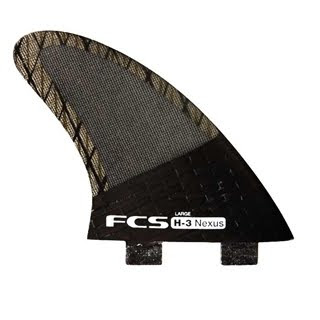
The FCS H-3 Nexus didn't go half way either. They used Bi-axial Carbon and Uni-directional Kevlar to control the flex and twist of the fins. FCS designed the Nexus using a low aspect ratio elliptical template. The base of the fins are also long, providing drive. This is combined with a highly cambered foil through the fin base further increasing drive and hold.The tips of the H-3 Nexus fins on the other hand feature moderate volume and a low cambered foil, offering stability and fin release.
Here are some videos from the manufacturers describing the fins themselves.

The construction that futures uses is a Carbon fiber base, Texcellium mid section, and a fiber glass tip. This keeps the fin stiff at the base for drive, and allow gradual flex instead of a pivot point in the fin. Futures didn't use this new material technology on one of their standard templates. They implemented their vector foils to give the Solus several different planing surfaces on the inside face, and rounded out the vector hatchet center fin.

The FCS H-3 Nexus didn't go half way either. They used Bi-axial Carbon and Uni-directional Kevlar to control the flex and twist of the fins. FCS designed the Nexus using a low aspect ratio elliptical template. The base of the fins are also long, providing drive. This is combined with a highly cambered foil through the fin base further increasing drive and hold.The tips of the H-3 Nexus fins on the other hand feature moderate volume and a low cambered foil, offering stability and fin release.
Here are some videos from the manufacturers describing the fins themselves.
FCS Nexus Development from FCS on Vimeo.
Friday, August 27, 2010
The Dark Side of the Lens
When I was checking the surf forecast this morning I noticed a bold title on Wetsands.com in the margin. "Is This The Best Short Surf Film Ever Made?" While they weren't quite bold enough to say it IS the best, it still was too bold to pass up.
The following Youtube video was made by Mickey Smith, a surf photographer from Ireland who entered the video in an energy drink short film competition. While the music isn't the standard adrenaline pumping death metal, the film is nothing short of intense.
The following Youtube video was made by Mickey Smith, a surf photographer from Ireland who entered the video in an energy drink short film competition. While the music isn't the standard adrenaline pumping death metal, the film is nothing short of intense.
Thursday, August 19, 2010
Why Mick Fanning Chose FCS
When you are the reigning world champ the industry is your oyster, and its an all you can eat buffet. So when Mick Fanning decided to sign with FCS, we had to know why. Unfortunately we don't have the means to get an interview ourselves, so we were fortunate to find an interview conducted by Tracks Magazine in Australia where they engage Mick on the subject of fins. Here's a cut from the interview:
"Firstly Mick, when signing a new sponsorship agreement, is it the money or the product itself that you consider most – fins surely has to be performance-based decision?
What happened was I went and tried different fin systems, cause I was riding glass on fins and I was so set on them I couldn’t ride any other fin system. I eventually became sick of carrying 12 boards with glass ons. What I did was I got a couple of different fin systems put on a quiver of boards and took them all on the Red Bull boat in Indonesia last year and tried all the different ones together – and the FCS ones felt the best.
So you were one of the last guys on tour lugging around boards with set fins?
Yeah, it was heavy.
Literally.
Yeah.
Mick winds-up and then releases at home at Duranbah Beach, NSW. Pic: Simon Muirhead
So, after your little test – FCS won. Why them?
It just felt like the FCS fin system had an extra bit of zing. We’d copied my favourite fin exactly (that I was using in glass ons) so I was using that as well and they felt great.
Would you consider yourself a fin expert? Or are you a bit of a novice?
It’s one of those things where the slightest little change in your fin affects the board’s performance so much. And then it keeps evolving. Put it this way, I know what I like. I have been working on a new fin by throwing around ideas and that, but it’s hard to find the exact right things.
Bit scary to get too far away from what you know and love. You might never find your way back?
That’s the thing. I guess that’s what happens when you have a board and you put the wrong fins in it – if it goes bad it can really put you off. But then you put a different fin set in that fits it perfect – and it goes completely different. Changing what initially felt like a bad board, into a good board. That’s what I like now – the options.
With all your boards Mick, and all these fins, you could rattle yourself at an event with too many options?
I tend to use the same fin for all my short boards then change up for my guns. On my guns the fin I use is a little smaller and pivoty.
So, it’s not the bigger the board, the bigger fin? But more rakie?
My bigger board fin has got a good base with a bit more rake and more sort of bend through the back. Allows you to still have the drive, but if you wanna turn it – it will turn on a dime.
Is this fin that you had set in all your boards previously going to become your signature fin?
We were going to do a signature fin but we’re still working on which one to go with. It’s like I said before, you think have something, then something else comes along, and then that feels better, then something else comes along and then that feels better – or worse – and you go backwards. It’s forever evolving. We’ll have a signature fin out by next year and that will be the fin that I ride 95% of the time. And then we’ll have something else out after that. Something more diverse I’d imagine.
That makes sense. A smaller fin that allows you to turn a big board in big waves and a bigger fin that gives you drive in an already lose small board.
That’s what we do. I have a fin now that is nice and even through the whole way. At places like Trestles you want that drive but when you throw the fins you don’t want it to be out of control. You want it to grab when it hits the deck again. And you also want to be able to draw out your turns and mix it right up."
If he doesn't have credibility on how a fin feel, then no one does. Here's a clip of Mick surfing back in home at D Bah, showing the rest of us how it's done.
"Firstly Mick, when signing a new sponsorship agreement, is it the money or the product itself that you consider most – fins surely has to be performance-based decision?
What happened was I went and tried different fin systems, cause I was riding glass on fins and I was so set on them I couldn’t ride any other fin system. I eventually became sick of carrying 12 boards with glass ons. What I did was I got a couple of different fin systems put on a quiver of boards and took them all on the Red Bull boat in Indonesia last year and tried all the different ones together – and the FCS ones felt the best.
So you were one of the last guys on tour lugging around boards with set fins?
Yeah, it was heavy.
Literally.
Yeah.
Mick winds-up and then releases at home at Duranbah Beach, NSW. Pic: Simon Muirhead
So, after your little test – FCS won. Why them?
It just felt like the FCS fin system had an extra bit of zing. We’d copied my favourite fin exactly (that I was using in glass ons) so I was using that as well and they felt great.
Would you consider yourself a fin expert? Or are you a bit of a novice?
It’s one of those things where the slightest little change in your fin affects the board’s performance so much. And then it keeps evolving. Put it this way, I know what I like. I have been working on a new fin by throwing around ideas and that, but it’s hard to find the exact right things.
Bit scary to get too far away from what you know and love. You might never find your way back?
That’s the thing. I guess that’s what happens when you have a board and you put the wrong fins in it – if it goes bad it can really put you off. But then you put a different fin set in that fits it perfect – and it goes completely different. Changing what initially felt like a bad board, into a good board. That’s what I like now – the options.
With all your boards Mick, and all these fins, you could rattle yourself at an event with too many options?
I tend to use the same fin for all my short boards then change up for my guns. On my guns the fin I use is a little smaller and pivoty.
So, it’s not the bigger the board, the bigger fin? But more rakie?
My bigger board fin has got a good base with a bit more rake and more sort of bend through the back. Allows you to still have the drive, but if you wanna turn it – it will turn on a dime.
Is this fin that you had set in all your boards previously going to become your signature fin?
We were going to do a signature fin but we’re still working on which one to go with. It’s like I said before, you think have something, then something else comes along, and then that feels better, then something else comes along and then that feels better – or worse – and you go backwards. It’s forever evolving. We’ll have a signature fin out by next year and that will be the fin that I ride 95% of the time. And then we’ll have something else out after that. Something more diverse I’d imagine.
That makes sense. A smaller fin that allows you to turn a big board in big waves and a bigger fin that gives you drive in an already lose small board.
That’s what we do. I have a fin now that is nice and even through the whole way. At places like Trestles you want that drive but when you throw the fins you don’t want it to be out of control. You want it to grab when it hits the deck again. And you also want to be able to draw out your turns and mix it right up."
If he doesn't have credibility on how a fin feel, then no one does. Here's a clip of Mick surfing back in home at D Bah, showing the rest of us how it's done.
Subscribe to:
Posts (Atom)